‘To understand where we’re going, you have to understand the past’.
The United States has long been called the ‘greatest country in the world’.
European colonization of North America, began in the late 15th century with the decimation of indigenous societies.
Right from its inception, the roots of both the United States and Canada, were founded solely on race and power.
But ‘some’ people don’t want you to know that and have named this ‘CRT’ or ‘critical race theory’, if you will, so that you don’t find out how racist some white people are.
Including the founding fathers.
Regardless of what ‘some‘ people would like you to believe, Christopher Columbus did not discover America in 1492.
In fact, by that time, millions of people had already lived there.
In 1776, the United States declared its independence.
The Constitution was adopted in 1789, and a Bill of Rights was added in 1791 to guarantee certain rights to people.
From 1776 – 1865, the legal institution of a human being – A.K.A – slavery, was legal in the United States.
Historically, Africans and African Americans were the ones who were primarily owned, and sold in the slave trade.
Under the law, an enslaved person was treated as property that could be bought, sold, or given away. Slavery lasted in about half of U.S. states until abolition in 1865, and issues concerning slavery seeped into every aspect of national politics, economics, and social custom.
It has been estimated that before 1820 a majority of serving congressmen owned slaves, and that about 30 percent of congressmen who were born before 1840 (some of whom served into the 20th century) owned slaves at some time in their lives.
Driven by labor demands from new cotton plantations in the Deep South, the Upper South sold more than a million slaves who were taken to the Deep South. The total slave population in the South eventually reached four million.
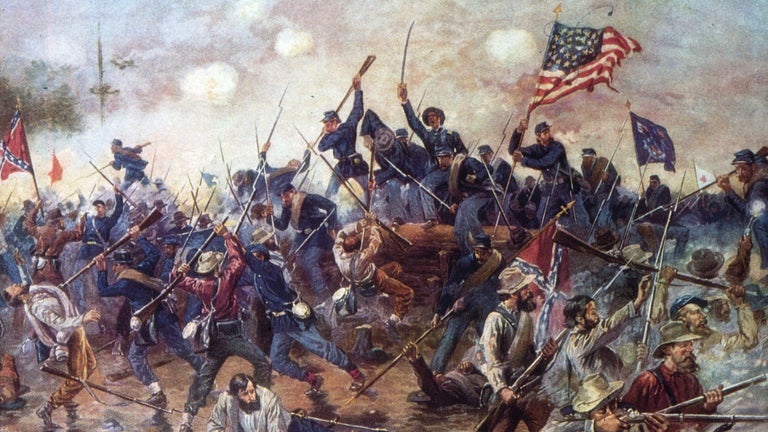
When Abraham Lincoln won the 1860 election on a platform of halting the expansion of slavery, slave states seceded to form the Confederacy. Shortly afterward, the Civil War began when Confederate forces attacked the U.S. Army’s Fort Sumter in Charleston, South Carolina. During the war some jurisdictions abolished slavery and, due to Union measures such as the Confiscation Acts and the Emancipation Proclamation, the war effectively ended slavery in most places.
So yes.
The Civil War broke out and started because white people kept wanting to participate in the slave trade.
The Naturalization Act of 1790 set the first uniform rules for the granting of United States citizenship by naturalization, which limited naturalization to “free white person[s],” thus, excluding Native Americans, indentured servants, slaves, free Blacks and later, Asians from citizenship. Citizenship status determined one’s eligibility for many legal and political rights, including suffrage rights at both the federal and state level, the right to hold certain government offices, the right to serve jury duty, and the right to serve in the United States Armed Forces. The second Militia Act of 1792 also provided for the conscription of every “free able-bodied white male citizen”. Tennessee’s 1834 Constitution included a provision: “the free white men of this State have a right to Keep and bear arms for their common defense.”
The Treaty of Dancing Rabbit Creek, made under the Indian Removal Act of 1830, allowed Choctaw Indians who chose to remain in Mississippi to gain recognition as U.S. citizens. They were the first non-European ethnic group to become entitled to U.S. citizenship.
The Naturalization Act of 1870 extended naturalization to Black persons, but not to other non-white persons and revoked the citizenship of naturalized Chinese Americans. The law relied on coded language to exclude “aliens ineligible for citizenship,” which primarily applied to Chinese and Japanese immigrants.
Native Americans were granted citizenship in a piece-meal manner until the Indian Citizenship Act of 1924, which unilaterally bestowed blanket citizenship status on them, whether they belonged to a federally recognized Tribe or not. However, by that date, two-thirds of Native Americans had already become U.S. citizens through various means. The Act was not retroactive, so, citizenship was not extended to Native Americans who were born before the effective date of the 1924 Act, nor was it extended to Indigenous persons who were born outside the United States.
Further changes to racial eligibility for citizenship by naturalization were made after 1940, when eligibility was extended to “descendants of races indigenous to the Western Hemisphere,” “Filipino persons or persons of Filipino descent,” “Chinese persons or persons of Chinese descent,” and “persons of races indigenous to India.” The Immigration and Nationality Act of 1952 now prohibits racial and gender discrimination in naturalization.
During the period when only “white” people could be naturalized, many court decisions were required to define which ethnic groups were included in this term. These are known as the “racial prerequisite cases,” and they also informed subsequent legislation.
The Fifteenth Amendment to the United States Constitution (ratified in 1870), explicitly prohibited denying the right to vote based on race, but delegated to Congress the responsibility for enforcement.
During the Reconstruction era, African Americans began to run for office and vote, but the Compromise of 1877 ended the era of strong federal enforcement of equal rights in the Southern states. White Southerners were prevented, by the Fifteenth Amendment, from explicitly denying the vote to Blacks by law, but they found other ways to disenfranchise. Jim Crow laws that targeted African Americans, without mentioning race, included poll taxes, literacy and comprehension tests for voters, residency and record-keeping requirements, and grandfather clauses allowing White people to vote. Black Codes criminalized minor offenses like unemployment (styled “vagrancy”), providing a pretext to deny voting rights. Extralegal violence was also used to terrorize and sometimes kill African Americans who attempted to register or to vote, often in the form of lynching and cross burning. These efforts to enforce white supremacy were very successful. For example, after 1890, less than 9,000 of Mississippi’s 147,000 eligible African American voters were registered to vote, or about 6%. Louisiana went from 130,000 registered African American voters in 1896 to 1,342 in 1904 (about a 99% decrease).
The Jim Crow laws were state and local laws introduced in the Southern United States in the late 19th and early 20th centuries that enforced racial segregation, “Jim Crow” being a pejorative term for an African American. The last of the Jim Crow laws were generally overturned in 1965. Formal and informal racial segregation policies were present in other areas of the United States as well, even as several states outside the South had banned discrimination in public accommodations and voting. Southern laws were enacted by white-dominated state legislatures (Redeemers) to disenfranchise and remove political and economic gains made by African Americans during the Reconstruction era. Such continuing racial segregation was also supported by the successful Lily-white movement.
In practice, Jim Crow laws mandated racial segregation in all public facilities in the states of the former Confederate States of America and in some others, beginning in the 1870s. Jim Crow laws were upheld in 1896 in the case of Plessy v. Ferguson, in which the Supreme Court laid out its “separate but equal” legal doctrine concerning facilities for African Americans. Moreover, public education had essentially been segregated since its establishment in most of the South after the Civil War in 1861–1865. Companion laws excluded almost all African Americans from the vote in the South and deprived them of any representative government.
Although in theory, the “equal” segregation doctrine governed public facilities and transportation too, facilities for African Americans were consistently inferior and underfunded compared to facilities for white Americans; sometimes, there were no facilities for the black community at all. Far from equality, as a body of law, Jim Crow institutionalized economic, educational, political and social disadvantages and second-class citizenship for most African Americans living in the United States. After the National Association for the Advancement of Colored People (NAACP) was founded in 1909, it became involved in a sustained public protest and campaigns against the Jim Crow laws, and the so-called “separate but equal” doctrine.
In 1954, segregation of public schools (state-sponsored) was declared unconstitutional by the U.S. Supreme Court in the landmark case Brown v. Board of Education of Topeka. In some states, it took many years to implement this decision, while the Warren Court continued to rule against Jim Crow legislation in other cases such as Heart of Atlanta Motel, Inc. v. United States (1964). In general, the remaining Jim Crow laws were generally overturned by the Civil Rights Act of 1964 and the Voting Rights Act of 1965. Southern state anti-miscegenation laws were generally overturned in the 1967 case of Loving v. Virginia.
The civil rights movement was a social movement in the United States from 1954 to 1968 which aimed to abolish legalized racial segregation, discrimination, and disenfranchisement in the country, which most commonly affected African Americans. The movement had origins in the Reconstruction era in the late 19th century, and modern roots in the 1940s. After years of nonviolent protests and civil disobedience campaigns, the civil rights movement achieved many of its legislative goals in the 1960s, during which it secured new protections in federal law for the civil rights of all Americans.
Following the American Civil War (1861–1865), the three Reconstruction Amendments to the U.S. Constitution abolished slavery and granted citizenship to all African Americans, the majority of whom had recently been enslaved in the southern states. During Reconstruction, African-American men in the South voted and held political office, but after 1877 they were increasingly deprived of civil rights under racist Jim Crow laws (which for example banned interracial marriage, introduced literacy tests for voters, and segregated schools) and were subjected to violence from White supremacists during the nadir of American race relations. African Americans who moved to the North in order to improve their prospects in the Great Migration also faced barriers in employment and housing. Legal racial discrimination was upheld by the Supreme Court in its 1896 decision in Plessy v. Ferguson, which established the doctrine of “separate but equal”. The movement for civil rights, led by figures such as W. E. B. Du Bois and Booker T. Washington, achieved few gains until after World War II. In 1948, President Harry S. Truman issued an executive order abolishing discrimination in the armed forces.
In 1954, the Supreme Court struck down state laws establishing racial segregation in public schools in Brown v. Board of Education. A mass movement for civil rights, led by Martin Luther King Jr. and others, began a campaign of nonviolent protests and civil disobedience including the Montgomery bus boycott in 1955–1956, “sit-ins” in Greensboro and Nashville in 1960, the Birmingham campaign in 1963, and a march from Selma to Montgomery in 1965. Press coverage of events such as the lynching of Emmett Till in 1955 and the use of fire hoses and dogs against protesters in Birmingham increased public support for the civil rights movement. In 1963, about 250,000 people participated in the March on Washington, after which President John F. Kennedy asked Congress to pass civil rights legislation. Kennedy’s successor, Lyndon B. Johnson, overcame the opposition of southern politicians to pass three major laws: the Civil Rights Act of 1964, which prohibited discrimination based on race, color, religion, sex, or national origin in public accommodations, employment, and federally assisted programs; the Voting Rights Act of 1965, which outlawed discriminatory voting laws and authorized federal oversight of election law in areas with a history of voter suppression; and the Fair Housing Act of 1968, which banned housing discrimination. The Supreme Court made further pro–civil rights rulings in cases including Browder v. Gayle (1956) and Loving v. Virginia (1967), banning segregation in public transport and striking down laws against interracial marriage.
The new civil rights laws ended most legal discrimination against African Americans, though informal racism remained. In the mid-1960s, the Black power movement emerged, which criticized leaders of the civil rights movement for their moderate and incremental tendencies. A wave of civil unrest in Black communities between 1964 and 1969, which peaked in 1967 and after the assassination of King in 1968, weakened support for the movement from White moderates. Despite affirmative action and other programs which expanded opportunities for Black and other minorities in the U.S. by the early 21st century, racial gaps in income, housing, education, and criminal justice continue to persist.
Rosa Louise McCauley Parks (February 4, 1913 – October 24, 2005) was an American activist in the civil rights movement, best known for her pivotal role in the Montgomery bus boycott. The United States Congress has honored her as “the first lady of civil rights” and “the mother of the freedom movement”.
Parks became an NAACP activist in 1943, participating in several high-profile civil rights campaigns. On December 1, 1955, in Montgomery, Alabama, Parks rejected bus driver James F. Blake’s order to vacate a row of four seats in the “colored” section in favor of a white female passenger who had complained to the driver, once the “white” section was filled. Parks was not the first person to resist bus segregation, but the National Association for the Advancement of Colored People (NAACP) believed that she was the best candidate for seeing through a court challenge after her arrest for civil disobedience in violating Alabama segregation laws, and she helped inspire the black community to boycott the Montgomery buses for over a year. The case became bogged down in the state courts, but the federal Montgomery bus lawsuit Browder v. Gayle resulted in a November 1956 decision that bus segregation is unconstitutional under the Equal Protection Clause of the 14th Amendment to the U.S. Constitution.
Parks’s act of defiance and the Montgomery bus boycott became important symbols of the movement. She became an international icon of resistance to racial segregation, and organized and collaborated with civil rights leaders, including Edgar Nixon and Martin Luther King Jr. At the time, Parks was employed as a seamstress at a local department store and was secretary of the Montgomery chapter of the NAACP. She had recently attended the Highlander Folk School, a Tennessee center for training activists for workers’ rights and racial equality. Although widely honored in later years, she also suffered for her act; she was fired from her job and received death threats for years afterwards. Shortly after the boycott, she moved to Detroit, where she briefly found similar work. From 1965 to 1988, she served as secretary and receptionist to John Conyers, an African-American US Representative. She was also active in the black power movement and the support of political prisoners in the US.
Martin Luther King Jr. (born Michael King Jr.; January 15, 1929 – April 4, 1968) was an American Baptist minister, activist, and political philosopher who was one of the most prominent leaders in the civil rights movement from 1955 until his assassination in 1968. King advanced civil rights for people of color in the United States through the use of nonviolent resistance and nonviolent civil disobedience against Jim Crow laws and other forms of legalized discrimination.
A black church leader, King participated in and led marches for the right to vote, desegregation, labor rights, and other civil rights. He oversaw the 1955 Montgomery bus boycott and later became the first president of the Southern Christian Leadership Conference (SCLC). As president of the SCLC, he led the unsuccessful Albany Movement in Albany, Georgia, and helped organize some of the nonviolent 1963 protests in Birmingham, Alabama. King was one of the leaders of the 1963 March on Washington, where he delivered his “I Have a Dream” speech on the steps of the Lincoln Memorial, and helped organize two of the three Selma to Montgomery marches during the 1965 Selma voting rights movement. The civil rights movement achieved pivotal legislative gains in the Civil Rights Act of 1964, the Voting Rights Act of 1965, and the Fair Housing Act of 1968. There were several dramatic standoffs with segregationist authorities, who often responded violently.
King was jailed several times. Federal Bureau of Investigation (FBI) director J. Edgar Hoover considered King a radical and made him an object of the FBI’s COINTELPRO from 1963 forward. FBI agents investigated him for possible communist ties, spied on his personal life, and secretly recorded him. In 1964, the FBI mailed King a threatening anonymous letter, which he interpreted as an attempt to make him commit suicide. On October 14, 1964, King won the Nobel Peace Prize for combating racial inequality through nonviolent resistance. In his final years, he expanded his focus to include opposition towards poverty and the Vietnam War.
In 1968, King was planning a national occupation of Washington, D.C., to be called the Poor People’s Campaign, when he was assassinated on April 4 in Memphis, Tennessee. James Earl Ray, a fugitive from the Missouri State Penitentiary, was convicted of the assassination, though the King family believes he was a scapegoat. After a 1999 wrongful death lawsuit ruling named unspecified “government agencies” among the co-conspirators, a Department of Justice investigation found no evidence of a conspiracy. The assassination remains the subject of conspiracy theories. King’s death was followed by national mourning, as well as anger leading to riots in many U.S. cities. King was posthumously awarded the Presidential Medal of Freedom in 1977 and the Congressional Gold Medal in 2003. Martin Luther King Jr. Day was established as a holiday in cities and states throughout the United States beginning in 1971; the federal holiday was first observed in 1986. The Martin Luther King Jr. Memorial on the National Mall in Washington, D.C., was dedicated in 2011.
Malcolm X (born Malcolm Little, later el-Hajj Malik el-Shabazz; May 19, 1925 – February 21, 1965) was an African American revolutionary, Muslim minister and human rights activist who was a prominent figure during the civil rights movement until his assassination in 1965. A spokesman for the Nation of Islam (NOI) until 1964, he was a vocal advocate for Black empowerment and the promotion of Islam within the African American community. A controversial figure accused of preaching violence, Malcolm X is also a widely celebrated figure within African American and Muslim communities for his pursuit of racial justice.
Malcolm spent his adolescence living in a series of foster homes or with relatives after his father’s death and his mother’s hospitalization. He committed various crimes, being sentenced to 8 to 10 years in prison in 1946 for larceny and burglary. In prison, he joined the Nation of Islam, adopting the name Malcolm X to symbolize his unknown African ancestral surname while discarding “the white slavemaster name of ‘Little’”, and after his parole in 1952, he quickly became one of the organization’s most influential leaders. He was the public face of the organization for 12 years, advocating Black empowerment and separation of Black and White Americans, and criticizing Martin Luther King Jr. and the mainstream civil rights movement for its emphasis on non-violence and racial integration. Malcolm X also expressed pride in some of the Nation’s social welfare achievements, such as its free drug rehabilitation program. From the 1950s onward, Malcolm X was subjected to surveillance by the Federal Bureau of Investigation (FBI).
In the 1960s, Malcolm X began to grow disillusioned with the Nation of Islam, as well as with its leader, Elijah Muhammad. He subsequently embraced Sunni Islam and the civil rights movement after completing the Hajj to Mecca and became known as “el-Hajj Malik el-Shabazz”, which roughly translates to “The Pilgrim Malcolm the Patriarch”. After a brief period of travel across Africa, he publicly renounced the Nation of Islam and founded the Islamic Muslim Mosque, Inc. (MMI) and the Pan-African Organization of Afro-American Unity (OAAU). Throughout 1964, his conflict with the Nation of Islam intensified, and he was repeatedly sent death threats. On February 21, 1965, he was assassinated in New York City. Three Nation members were charged with the murder and given indeterminate life sentences. In 2021, two of the convictions were vacated. Speculation about the assassination and whether it were conceived or aided by leading or additional members of the Nation, or with law enforcement agencies, has persisted for decades.
He was posthumously honored with Malcolm X Day, on which he is commemorated in various cities across the United States. Hundreds of streets and schools in the U.S. have been renamed in his honor, while the Audubon Ballroom, the site of his assassination, was partly redeveloped in 2005 to accommodate the Malcolm X and Dr. Betty Shabazz Memorial and Educational Center. A posthumous autobiography, on which he collaborated with Alex Haley, was published in 1965.
Rodney Glen King (April 2, 1965 – June 17, 2012) was an African-American man who was a victim of police brutality. On March 3, 1991, he was severely beaten by officers of the Los Angeles Police Department (LAPD) during his arrest after a high speed pursuit for driving while intoxicated on the I-210. An uninvolved resident, George Holliday, saw and filmed the incident from his nearby balcony and sent the footage, which showed King on the ground being beaten after initially evading arrest, to local news station KTLA. The incident was covered by news media around the world and caused a public uproar.
At a press conference, Los Angeles police chief Daryl Gates announced that the four officers involved would be disciplined for use of excessive force and that three would face criminal charges. The LAPD initially charged King with “felony evading”, but later dropped the charge. On his release, King spoke to reporters from his wheelchair, with his injuries evident: a broken right leg in a cast, his face badly cut and swollen, bruises on his body, and a burn area to his chest where he had been jolted with a stun gun. King described how he had knelt, spread his hands out, then slowly tried to move so as not to make any “stupid moves”, before being hit across the face by a billy club, and shocked with a stun gun. King also said he was scared for his life when the officers drew their guns on him.
Four officers were eventually tried on charges of use of excessive force. Of these, three were acquitted; the jury failed to reach a verdict on one charge for the fourth. Within hours of the acquittals, the 1992 Los Angeles riots started, sparked by outrage among racial minorities over the trial’s verdict and related, longstanding social issues, overlaid with tensions between the African American and Korean American communities. The rioting lasted six days and killed 63 people, with 2,383 more injured; it ended only after the California Army National Guard, the Army, and the Marine Corps provided reinforcements to re-establish control. King advocated for a peaceful end to the conflict.
The federal government prosecuted a separate civil rights case, obtaining grand jury indictments of the four officers for violations of King’s civil rights. Their trial in a federal district court ended in April 1993, with two of the officers being found guilty and sentenced to serve prison terms. The other two were acquitted of the charges. In a separate civil lawsuit in 1994, a jury found the City of Los Angeles liable and awarded King $3.8 million in damages.
D.E.I
Early DEI efforts included preferential hiring to veterans of the US Civil War and their widows in 1865. In 1876, this was amended to give preference to veterans during a Reduction in Force. In 1921 and 1929, executive orders by Presidents Coolidge and Harding established ten-point preference for veterans towards exams and hiring criteria for federal employment. In 1944, the Veterans’ Preference Act codified the previous executive orders, clarified criteria, and included special hiring provisions for disabled veterans. Later amendments added veterans from conflicts after World War II, special provisions for the mothers of disabled or deceased veterans, and job-specific training for veterans entering the federal or private workforce.
In 1936, President Franklin D. Roosevelt signed the Randolph-Sheppard Act, which mandated the federal government to give preference to purchase products made by the blind, and established the Committee on Purchases of Blind Made Products. The 1971 Javits–Wagner–O’Day Act expanded the Randolph-Sheppard act and changed the name to The Committee for Purchase from People Who Are Blind or Severely Disabled (now AbilityOne). Blind-made products are used throughout the federal government, and include brands such as Skillcraft, ARC Diversified, Austin Lighthouse, and Ability One.
Other DEI policies include Affirmative Action. The legal term “affirmative action” was first used in “Executive Order No. 10925”, signed by President John F. Kennedy on 6 March 1961, which included a provision that government contractors “take affirmative action to ensure that applicants are employed, and employees are treated [fairly] during employment, without regard to their race, creed, color, or national origin”. It was used to promote actions that achieve non-discrimination. In September 1965, President Lyndon Johnson issued Executive Order 11246 which required government employers to “hire without regard to race, religion and national origin” and “take affirmative action to ensure that applicants are employed and that employees are treated during employment, without regard to their race, color, religion, sex or national origin.” The Civil Rights Act of 1964 prohibited discrimination based on race, color, religion, sex or national origin. Neither executive order nor The Civil Rights Act authorized group preferences. The Senate floor manager of the bill, Senator Hubert Humphrey, declared that the bill “would prohibit preferential treatment for any particular group” adding “I will eat my hat if this leads to racial quotas.” However, affirmative action in practice would eventually become synonymous with preferences, goals, and quotas as upheld or struck down by Supreme Court decisions such as Students for Fair Admissions v. Harvard even though no law had been passed explicitly permitting discrimination in favor of disadvantaged groups. Some state laws explicitly banned racial preferences, and in response, some laws have failed to attempt to explicitly legalize race preferences.
More recently, concepts have moved beyond discrimination to include diversity, equity, and inclusion as motives for preferring historically underrepresented groups. In the famous Bakke decision of 1978, Regents of the University of California v. Bakke, diversity became a constitutional law factor. The Supreme Court ruled that quotas were illegal, but it was allowable to consider race as a plus factor when trying to foster “diversity” in their classes.
The 1980s
Diversity themes gained momentum in the mid-1980s. At a time when President Ronald Reagan threatened to dismantle equality and affirmative action laws in the 1980s, equality and affirmative action professionals employed by American firms along with equality consultants, engaged in establishing the argument that a diverse workforce should be seen as a competitive advantage rather than just as a legal constraint. Their message was not to promote diversity because it is a legal mandate but because it is good for business. From then on, researchers started to test a number of hypotheses on the business benefits of diversity and diversity management, known as the business case of diversity.
The 1990s
In 1990, President George H.W. Bush signed the Americans with Disabilities Act, which requires employers to provide reasonable accommodations to employees with disabilities, and imposes accessibility requirements on public accommodations. President Clinton signed the Veterans Employment Opportunities Act in 1998, helps eligible veterans access federal job opportunities by allowing them to compete for positions typically open only to current federal employees and by reinforcing veterans’ preference in hiring. It also protects veterans from discrimination in federal employment and provides a process for addressing violations of their rights.
Since the 2000s
By 2003, corporations spent $8 billion annually on diversity. In 2009, in response to calls for the US government to do more for disabled veterans returning from the conflicts in Iraq and Afghanistan President Barack Obama signed executive order 13518, which established the Veterans Employment Initiative to enhance recruitment and retention of veterans in the federal workforce by creating a comprehensive framework to support their transition into civilian employment. It directed federal agencies to increase veteran hiring (especially disabled veterans), set goals for improvement, and establish the Veterans Employment Program Office to provide assistance and resources for veterans in civilian employment. In 2011, Barack Obama signed Executive Order 13583 concerning diversity and inclusion. After the election of Donald Trump in 2016 and the ascent of the #MeToo and Black Lives Matter movements, Time magazine stated in 2019 that the DEI industry had “exploded” in size. Within academia, a 2019 survey found that spending on DEI efforts had increased 27 percent over the five preceding academic years.
In support of DEI hiring during the first term of Donald Trump, the Office of Civil Rights of the Federal Aviation Authority FAA on Thursday, April 11, 2019 announced a pilot program to help prepare people with disabilities for careers in air traffic operations, which identifies specific opportunities for people with targeted disabilities, to facilitate their entry into a more “diverse and inclusive” workforce in a standard public opening for air traffic controller jobs at the Air Route Traffic Control Center (ARTCC) with the potential to be appointed to a temporary ATCS position at the FAA Academy.
One 2020 estimate placed the size of the global diversity and inclusion market at $7.5 billion, of which $3.4 billion was in the United States, projecting it to reach $17.2 billion by 2027.
In 2021, Joe Biden signed several executive orders concerning DEI, including Executive Order 13985 and Executive Order 14035. In 2021, New York magazine stated that “the business became astronomically larger than ever” after the murder of George Floyd in May 2020. The Economist has also stated that surveys of international companies indicate that the number of people hired for jobs with “diversity” or “inclusion” in the title more than quadrupled since 2010.
In 2023, The Supreme Court explicitly rejected affirmative action regarding race in college admissions in Students for Fair Admissions v. Harvard. The Court held that affirmative action programs “lack sufficiently focused and measurable objectives warranting the use of race, unavoidably employ race in a negative manner, involve racial stereotyping, and lack meaningful endpoints. We have never permitted admissions programs to work in that way, and we will not do so today”.
As of 2024, affirmative action in the United States had been increasingly replaced by emphasis on diversity, equity, and inclusion, while nine states explicitly banned its use in the employment process.
In January 2025, President Trump called DEI efforts “illegal and immoral discrimination programs” and “public waste” in his January 20 executive order, rescinded Executive Order 11246 on January 21, demanding that all governmental DEI programs be shut down by January 23, and placed employees on administrative leave and eventually laid off.
In 2024 and 2025, several large American companies scaled back or ended their DEI programs and, in some cases, related policies, such as participation in the Corporate Equality Index. These included Walmart, Meta, Amazon, McDonald’s, Ford, Lowe’s, Harley-Davidson, John Deere, Tractor Supply and PBS. Generally, these companies said they will continue to foster a safe and inclusive workplace, while ending or reducing policies, initiatives, or programs that specifically take note of protected status. In this period, other companies reaffirmed their commitment to DEI, including Deutsche Bank, JPMorgan Chase, Goldman Sachs, Costco and the NFL.
Donald Trump was sued back in the 1970’s for not renting to black people. He never admitted any wrongdoing, but he settled the case.
https://www.politico.com/blogs/under-the-radar/2017/02/trump-fbi-files-discrimination-case-235067
https://vault.fbi.gov/trump-management-company
https://clearinghouse.net/doc/83283/
Roe VS. Wade
Roe v. Wade, 410 U.S. 113 (1973), was a landmark decision of the U.S. Supreme Court in which the Court ruled that the Constitution of the United States protected the right to have an abortion prior to the point of fetal viability. The decision struck down many State abortion laws, and it sparked an ongoing abortion debate in the United States about whether, or to what extent, abortion should be legal, who should decide the legality of abortion, and what the role of moral and religious views in the political sphere should be. The decision also shaped debate concerning which methods the Supreme Court should use in constitutional adjudication.
The case was brought by Norma McCorvey—under the legal pseudonym “Jane Roe”—who, in 1969, became pregnant with her third child. McCorvey wanted an abortion but lived in Texas where abortion was only legal when necessary to save the mother’s life. Her lawyers, Sarah Weddington and Linda Coffee, filed a lawsuit on her behalf in U.S. federal court against her local district attorney, Henry Wade, alleging that Texas’s abortion laws were unconstitutional. A special three-judge court of the U.S. District Court for the Northern District of Texas heard the case and ruled in her favor. The parties appealed this ruling to the Supreme Court. In January 1973, the Supreme Court issued a 7–2 decision in McCorvey’s favor holding that the Due Process Clause of the Fourteenth Amendment to the United States Constitution provides a fundamental “right to privacy”, which protects a pregnant woman’s right to an abortion. However, it also held that the right to abortion is not absolute and must be balanced against the government’s interest in protecting both women’s health and prenatal life. It resolved these competing interests by announcing a pregnancy trimester timetable to govern all abortion regulations in the United States. The Court also classified the right to abortion as “fundamental”, which required courts to evaluate challenged abortion laws under the “strict scrutiny” standard, the most stringent level of judicial review in the United States.
The Supreme Court’s decision in Roe was among the most controversial in U.S. history. Roe was criticized by some in the legal community, including some who thought that Roe reached the correct result but went about it the wrong way, and some called the decision a form of judicial activism. Others argued that Roe did not go far enough, as it was placed within the framework of civil rights rather than the broader human rights. The decision also radically reconfigured the voting coalitions of the Republican and Democratic parties in the following decades. Anti-abortion politicians and activists sought for decades to restrict abortion or overrule the decision; polls into the 21st century showed that a plurality and a majority, especially into the late 2010s to early 2020s, opposed overruling Roe. Despite criticism of the decision, the Supreme Court reaffirmed Roe‘s central holding in its 1992 decision, Planned Parenthood v. Casey. Casey overruled Roe‘s trimester framework and abandoned its “strict scrutiny” standard in favor of an “undue burden” test.
In 2022, the Supreme Court overruled Roe in Dobbs v. Jackson Women’s Health Organization on the grounds that the substantive right to abortion was not “deeply rooted in this Nation’s history or tradition”, nor considered a right when the Due Process Clause was ratified in 1868, and was unknown in U.S. law until Roe.
Just to be clear, the majority of the above historical information into race, slavery, The Civil Rights Movement, prominent figures (people) in time, Roe V. Wade, and D.E.I, in the United States is not mine.
I felt like there needed to be a one-stop-shop for the history of the United States, how it treats people of color, and how it really treats anyone different who is not a straight, white, Christian, male.
So I spent some time, scouring the internet for all the above information, to gather it all into one place. The bulk of the information comes from Wikipedia. Feel free to visit the links I provide below, to also engage with all the other links and information provided.
https://en.wikipedia.org/wiki/History_of_the_United_States
https://en.wikipedia.org/wiki/Slavery_in_the_United_States
https://en.wikipedia.org/wiki/Racism_in_the_United_States
https://en.wikipedia.org/wiki/Jim_Crow_laws
https://en.wikipedia.org/wiki/Civil_rights_movement
https://en.wikipedia.org/wiki/Rosa_Parks
https://en.wikipedia.org/wiki/Martin_Luther_King_Jr.
https://en.wikipedia.org/wiki/Malcolm_X
https://en.wikipedia.org/wiki/Rodney_King
https://en.wikipedia.org/wiki/Roe_v._Wade
Bottom Line.
The United States was founded in racism, greed and power and this has continued over time until this day.
Trump has proudly taken away a woman’s right to have an abortion and is now trying to shut down diversity and inclusion because ya know.
White, straight, Christian men have to stay in power.
Donald Trumps slogan is ‘Make America Great Again’.
Which era of ‘great’ would you like to go back to Donald?

 The System Kid
Leave a comment